

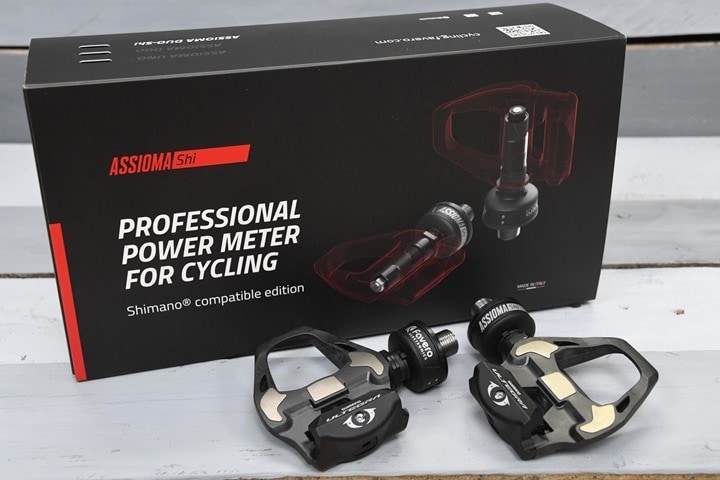
Favero has launched their newest Assioma variant today, the DUO-Shi, which simply takes the existing Favero Assioma pedals, but now with Shimano SPD-SL compatibility. Sorta.
See, while that’s the end-point, the DUO-Shi product is actually just the pedal spindles (for $ 589USD or ~589EUR including VAT (VAT inclusive pricing varies based on exact EU country). You’ll need to go out and buy the Shimano SPD-SL compatibility pedals of your own choosing. The good news there is that makes this product roughly $ 500-$ 600 cheaper than Garmin’s Rally SPD-SL variant. The bad news is you’ve got an arts and crafts project, plus some other technical things to consider. Don’t worry, we’ll talk about that in a second.
In any case, I’ve actually been quietly testing them for more than a *year*. Yes, an actual year. On and off (literally and figuratively), compared to a wide range of power meters, bikes, and smart trainers. Quietly removing them before photoshoots, but otherwise using them just like any other Favero Assioma pedal (because, they are exactly the same).
More recently I got the final production version in, which…are exactly the same internally as well. But with that comes final packaging and all the final goodness you’d expect. So that’s what I’m focusing on in this review. Oh, speaking of which, these are media loaner units, and both sets will go back to Favero afterwards. I’ve already got a few other Favero Assioma sets I’ve bought over the years that I use around the DCR Cave.
If you found this post useful, consider becoming a DCR Supporter which makes the site ad-free, while also getting access to a mostly weekly video series behind the scenes of the DCR Cave. And of course, it makes you awesome.
What’s New & Unique:
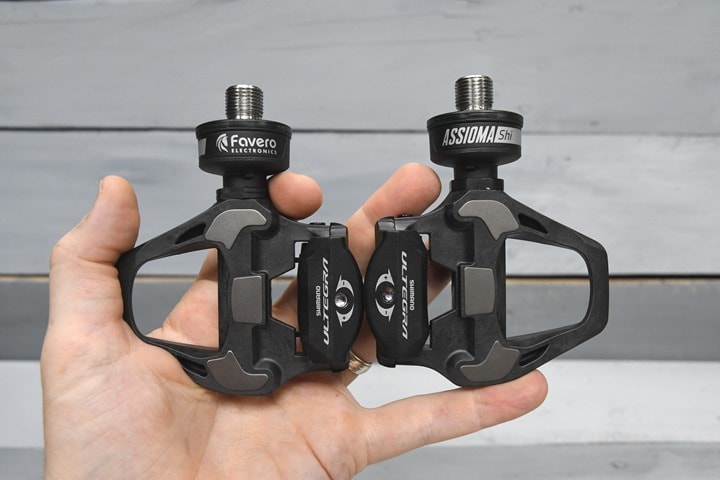
In short, nothing is new. This is the exact same Favero Assioma spindle as the previous edition, except it’s got a small oil retainer glued on. Instead, that tiny cap enables it to be inserted properly into a Shimano pedal, which in turn will measure your power exactly like the previous Favero Assioma. Favero says though that the gluing of that small retainer on the pedal spindle requires them to have a factory calibration procedure, which is why they can’t just offer a simple $ 20 conversion kit.
Otherwise, Favero states it’s exactly the same spindle as before. So this means that the pod remains as before.
Now – what’s important to know here is that this isn’t a completed product you can take home and install immediately on your bike. Instead, you will ALSO need to buy compatible Shimano pedal bodies (or perhaps you already have them), and then insert the Favero spindle into the Shimano pedals. This requires two wrenches that you probably have at home, and about 3-5 minutes of work.
The Assioma Duo-SHI are compatible with the following Shimano SPD-SL (road) type pedals (and thus SPD-SL cleats):
Shimano PD-R8000
Shimano PD-R7000
Shimano PD-6800
Shimano PD-R550
Shimano PD-R540
Note that Shimano’s DuraAce pedals use a different internal spindle, and thus are not compatible.
When all that is said and done, you’ll have a Shimano Favero Assioma power meter system, though with a slightly expanded Q-Factor, from 54mm to 65mm. The q-factor is the measurement of the distance between the pedal bodies (specifically the point the pedal is inserted into the crank arm). However, in this case, that would incorrectly not account for the pedal platforms being further out, thus, in reality, a better comparative measurement here is to the center of the pedal platform.
Q-Factor is confusingly stated as a measurement of one of two things:
1) The distance between the crank arms on both sides of the bike
2) The distance between the crank arm and the center of the pedal platform.
Much will be made about the increased q-factor by Favero. For some people, it’s everything and a deal-breaker. For the other 98% of us…shrug. The reason? Almost every bike type has a different q-factor. For fun, here’s my collection of bikes:
My road bike (Canyon Ultimate CF SL): 140mm
My triathlon bike (Cervelo P3C): ~150mm
My mountain bike (Canyon Exceed CF SL 5.0): 170mm
My cargo bike (Urban Arrow): 170mm
And then here’s a pile of popular indoor bikes, and their q-factors, for reference:
Stages Bike SB20: 157mm
Peloton Bike/Bike+: 170mm
Tacx NEO Smart Bike: 147mm
True Kinetix TrueBike: 155mm
Wattbike Pro: 173mm
Wattbike ATOM: 160mm
Wahoo KICKR Bike: 150mm
And remember, your pedal q-factor is technically atop these measurements. So, when it comes to pedal measurement, we’re talking this bit here, shown on an older Favero Assioma (standard) image:
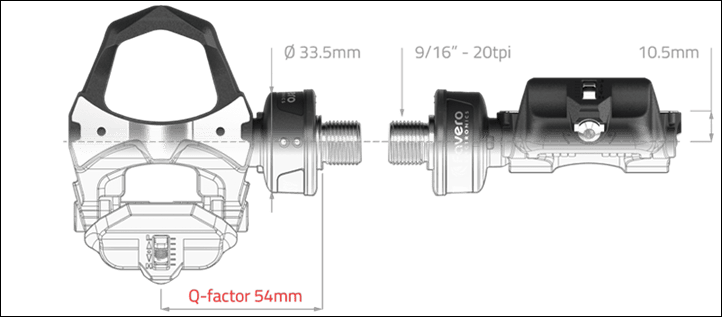
Variations in pedals, as measured from the edge of the crankset arm to the center of the pedal:
Garmin Vector 3/Rally Series: 53mm (55mm with their stock spacer)
PowerTap P1/P2: 54mm
Favero Assioma: 54mm (55mm with their stock spacer)
Favero Assioma Shimano: 65mm
Shimano Ultegra (non-power): 53mm
SRM X Power: 54mm
So yes, this pedal q-factor is different than others – but so are all your other bikes. So if you’re switching between bikes, you’ll likely never notice. It was a non-event for me. I’ve been riding the Favero Assioma DUO-Shi on and off for a year, alternating days on other road pedals and bikes without ever noticing.
But again – if you’re purely a roadie, then maybe you’ll notice – and of course, if you switch between a mountain bike and road bike frequently, then those are literally a wash. Of course, to each their own. You do you, I just keep pedaling.
Unboxing:
To begin, and also to reiterate again – when you buy the DUO-Shi, you DO NOT GET PEDALS. You get spindles, for which you need to buy pedals and put them together. Whereas when you buy regular Favero Assioma pedals, you get the whole thing pre-built (but for LOOK KEO pedals). With that note, here’s the box:
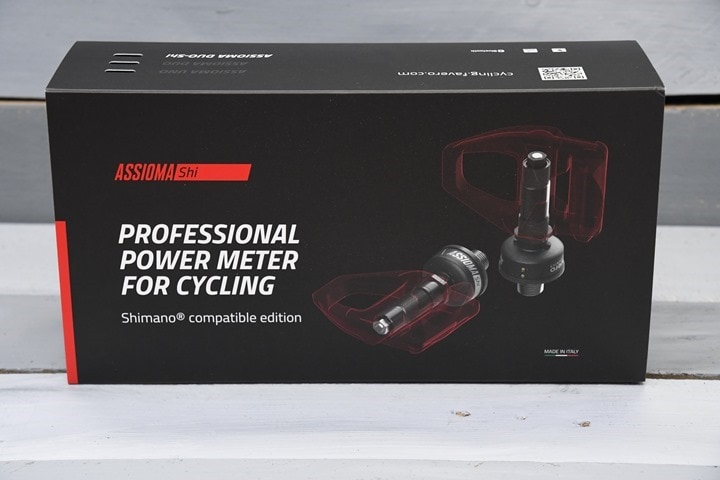
Crack that box open and you’ve got the two spindles poking out. Or rather, the pods poking out.
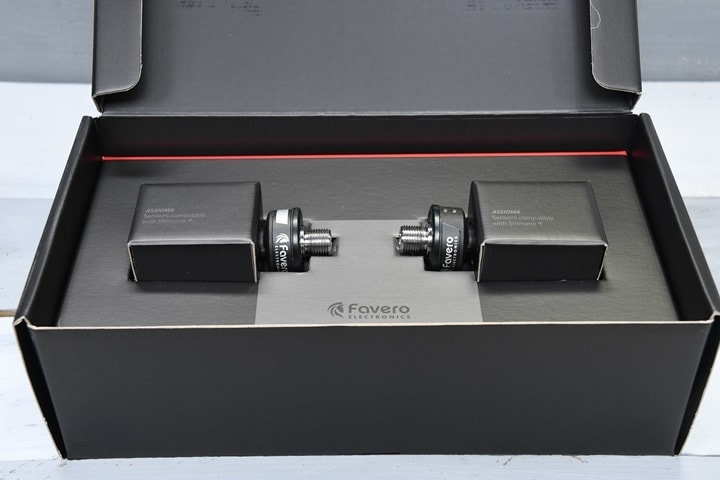
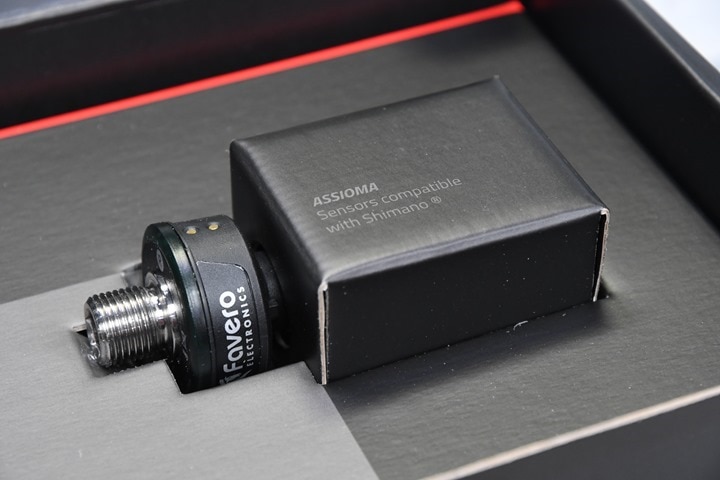
Here’s a closer look at them:
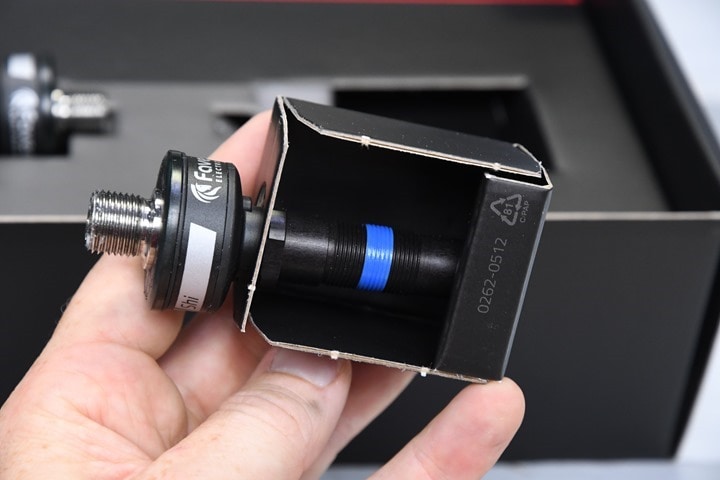
And, if you play peek-a-boo, you’ll find the spindle below the box top:
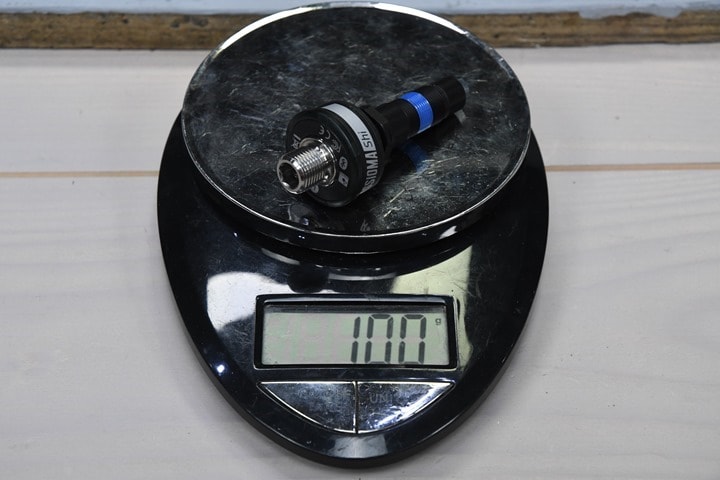
Here’s the weight of that:
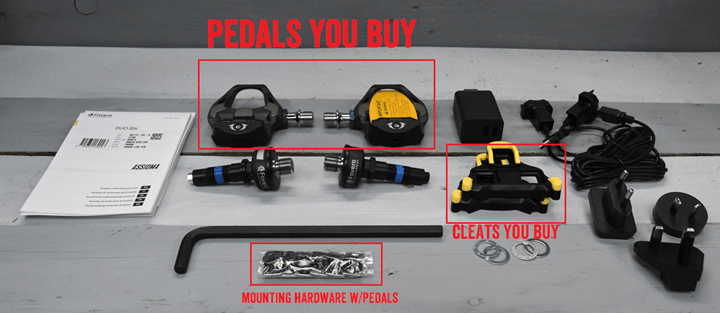
Now, inside the box you’ll find yourself a pedal wrench, charger block, charger cable, different power adapters, the two spindles, and some washers.
Meanwhile, you’ll need to go out and buy compatible Shimano pedals. If you stick all this stuff in one pile, you can see which parts you need to buy, and which parts they provide. Also, as you’ll soon discover, you’ll also need another two wrenches to actually put the spindles together.
And here you can see essentially how the two spindles align up to replace the two spindles that already exist in the Shimano SPD-SL pedals you’ll buy:
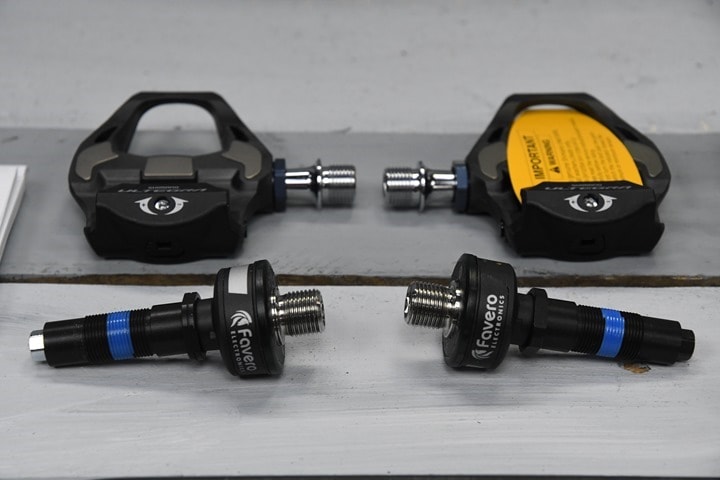
You can also see more clearly how when inserted in, the Favero spindles increase the Q-Factor because of the fact that they’re longer, to accommodate the pod.
With that, let’s put humpty dumpty together.
Assembly:
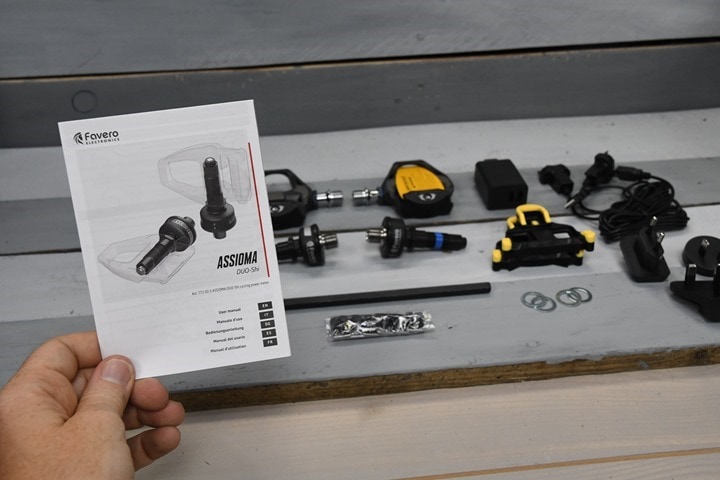
The manual is relatively straightforward, though the first time you’ll do it it’ll feel like the arts & crafts project it is. But remember, you’re saving $ 400-$ 500, so…that’s a lot of ice cream.
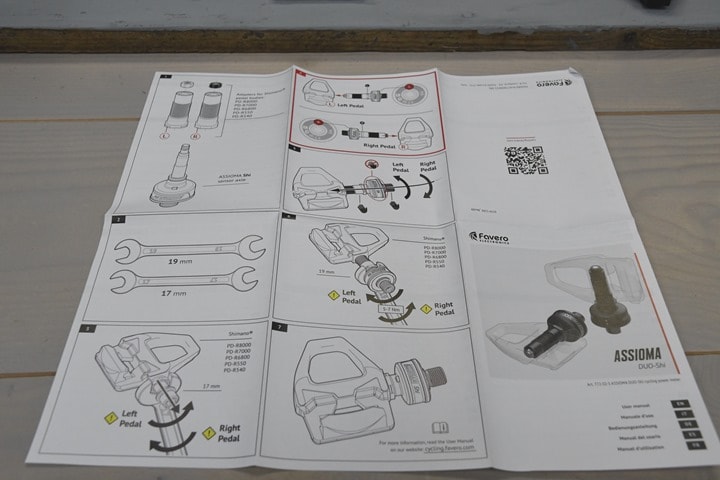
You’ll notice above, it asks for both a 17mm wrench and a 19mm wrench. Most people have these. Now, if you’re like me you’ll probably spend half a day looking for them because they’re not organized. I easily found a 17mm wrench, but couldn’t find my 19mm wrench. So, I grabbed a well-aged/ignored adjustable wrench to fill in the gap.
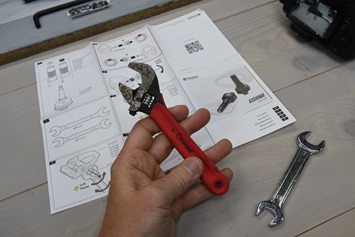
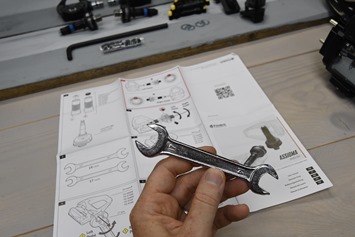
You’ll begin by removing the existing spindle from the Shimano pedal. You’ll use the 17mm wrench for that. It really only takes like 20 seconds.
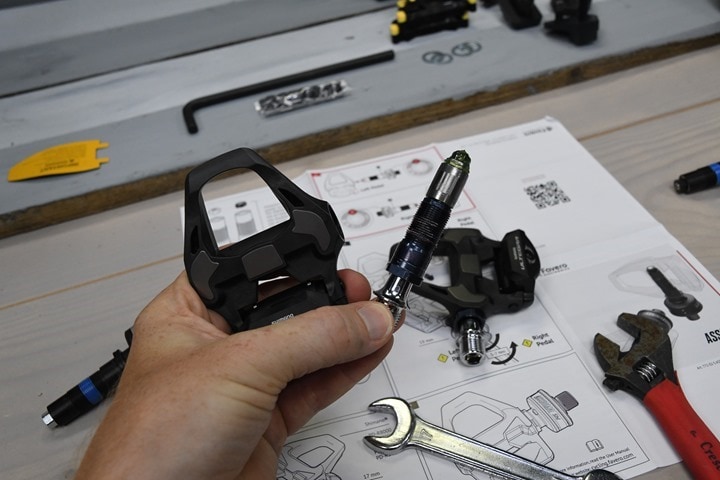
Then, you’ll grab the (hopefully) correct spindle to insert into the correct pedal. As in, right with right, left with left.
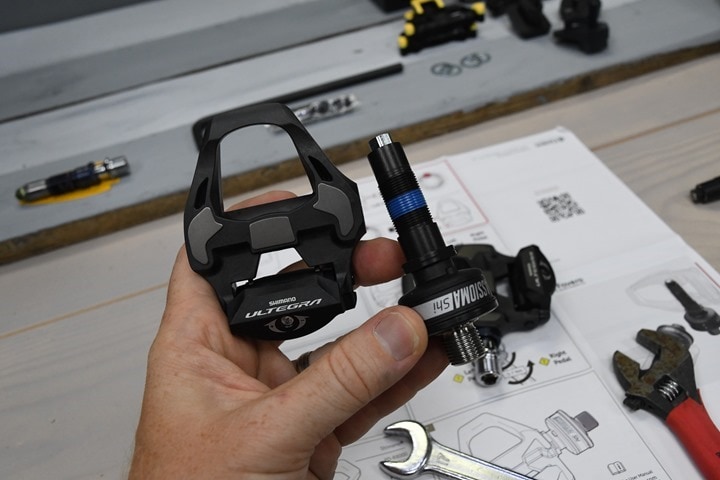
Then you’ll take that 19mm wrench with the Favero spindle and get things all happy and snug with the pedal. Again, takes about 20 seconds:
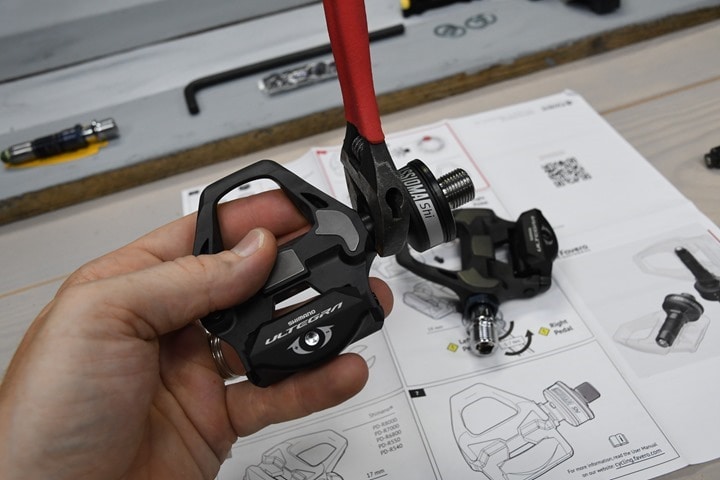
And…done:
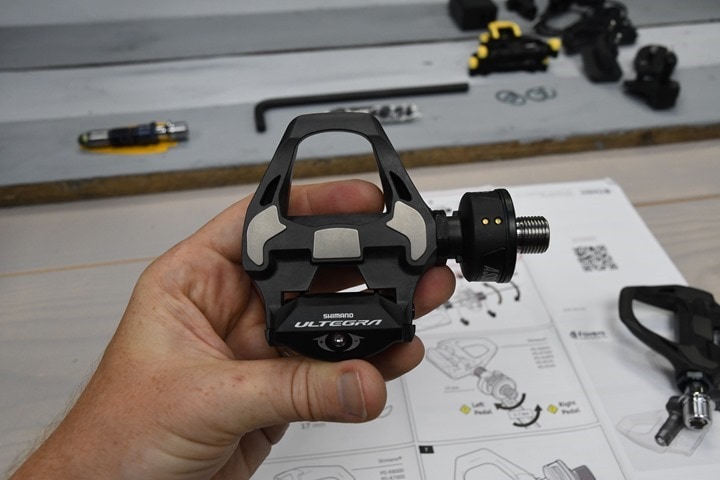
Well, actually, you’ll now repeat that for the other side, then donezo, for realz this time:
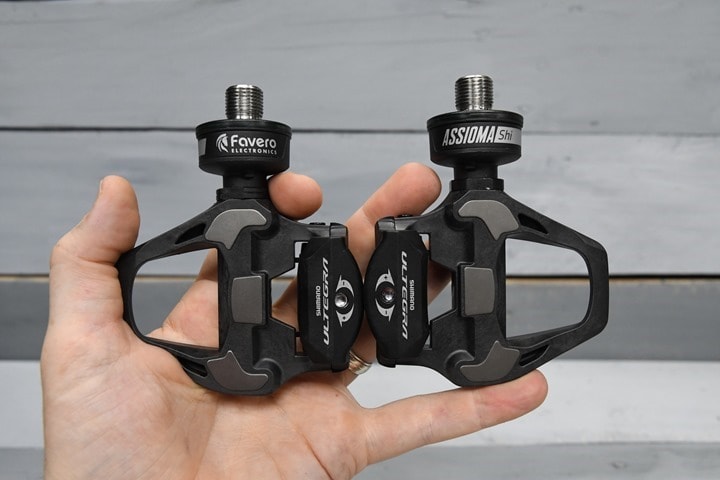
The entire thing at this point will weigh about 157g (per pedal) using the Shimano Ultegra PD-R800 pedals.
Bike Installation:
With everything assembled, we’ll need to get it affixed to our bike. This assumes you’ve removed your existing pedals using either a hex wrench (pictured below, included with the Favero Assioma pedals), or a standard pedal wrench. For the installation however, it requires the below hex wrench (included), as there’s no place to grip a pedal wrench onto due to the pods.
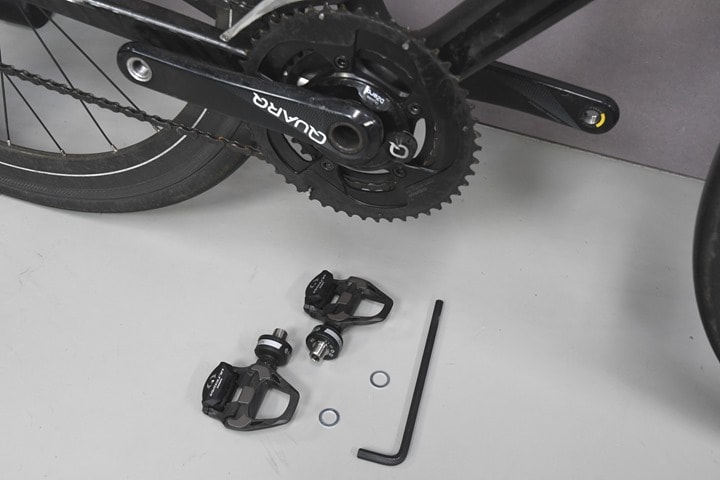
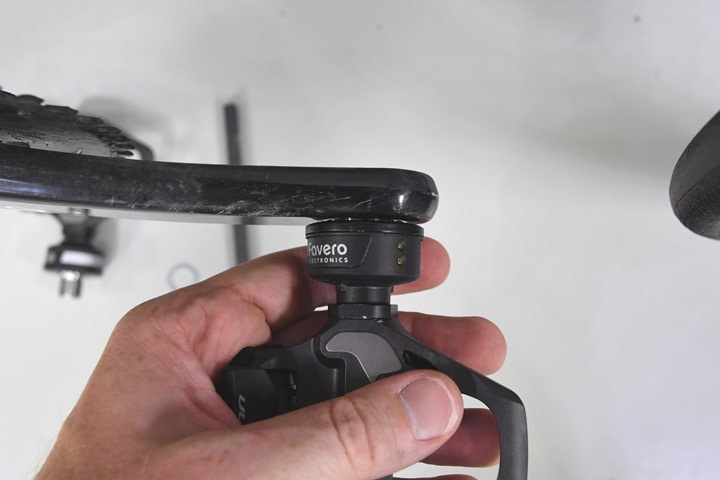
For installation, you can choose to use either of the two spacers (per side). The general gist of this is that you don’t want the pods to touch your crank arm when screwed in. Else that can cause damage to the pods, and inaccurate readings. In most cases, a single spacer will work perfectly, and is what I use.
Then, simply hand/finger spin the pedals onto the crank arm:
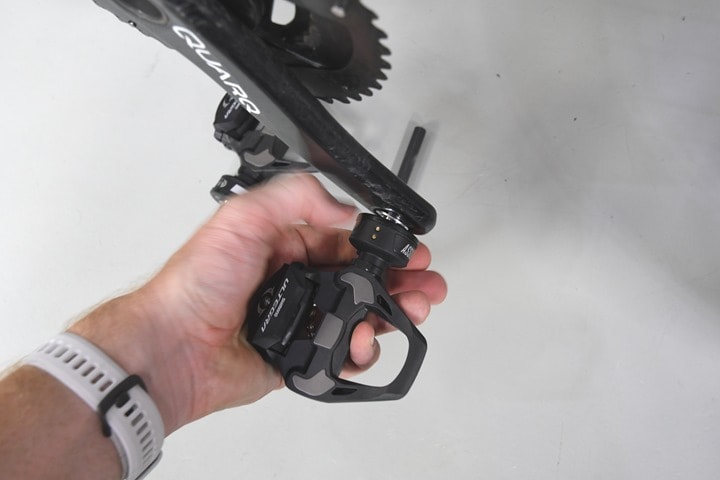
Once that’s snug, then go ahead and use the included hex wrench to make it nice and tight. Officially there’s a torque spec there, but since they didn’t include a torque wrench, and since I’ve been around this block long enough to know it won’t matter – you’re basically going to go with “nice and firm tight”, but not “gorilla tight”. Meaning, don’t try and break it. Just give it a mediocre arm-wrestling effort, and you’re fine. Note below how you can still see a tiny gap between the pod and the crank arm – that’s GOOD! If you can’t see any gap, add a spacer.
Now repeat for the other side:
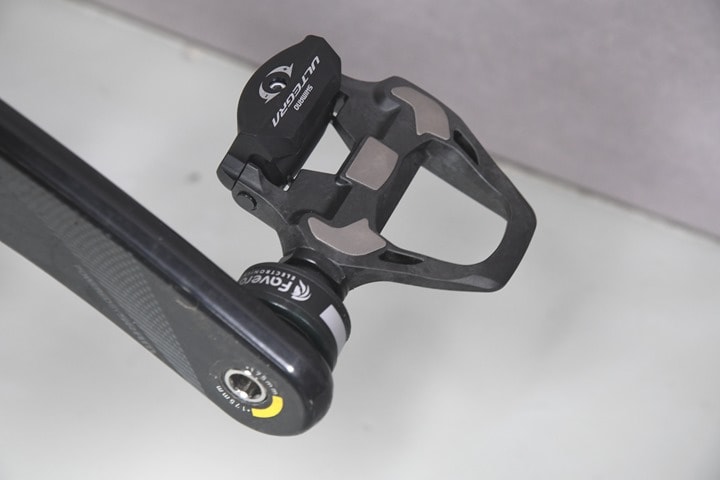
Now, you’ll need to do four things:
A) Wake up the pedals using the power cord
B) Activate the pedals using the app
C) Do a couple of short 5-10 second sprints (indoors or outside, doesn’t matter) to bed them in
D) Do a zero offset
To wake up the pedals for first use, simply attach the power cord pods to them, which pulls them out of the deep-sleep state. Normally just rotating them will wake them up, but for first use, they require attaching the power cable for a second.
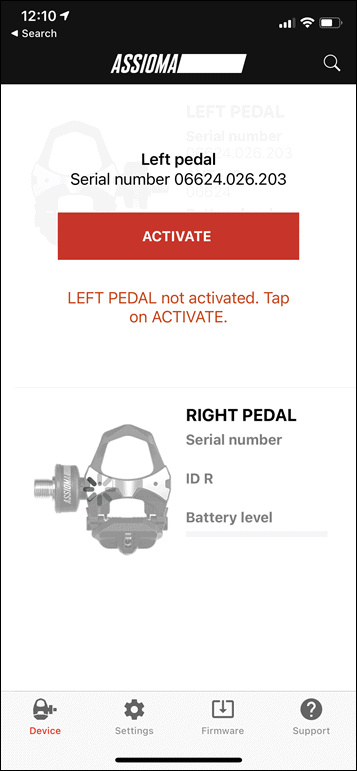
Next, grab the Favero Assioma app off the app store, and go through the activation process. It only takes a second, but without it your pedals won’t transmit any data. Again – no activation = no data.
![clip_image001[6]](http://media.dcrainmaker.com/images/2021/07/clip_image0016_thumb.png "clip_image001[6]")
Now, with that set, you can do a zero offset now if you’d like. And that’s fine. We’re gonna do it again in a few minutes. So instead, go and do some hard sprints. Ideally 3-4 of them, and ideally 5-10 seconds long. Also, ideally, as ‘sharp’ as you can. Lazy sprints aren’t good here. You’re essentially trying to tighten up the pedals to the crank arm, which in turn increases accuracy. If you don’t do this, it’ll basically take about a normal ride to complete and you’ll notice slightly inaccurate data during this ride. Again, doing this on a trainer is perfectly fine.
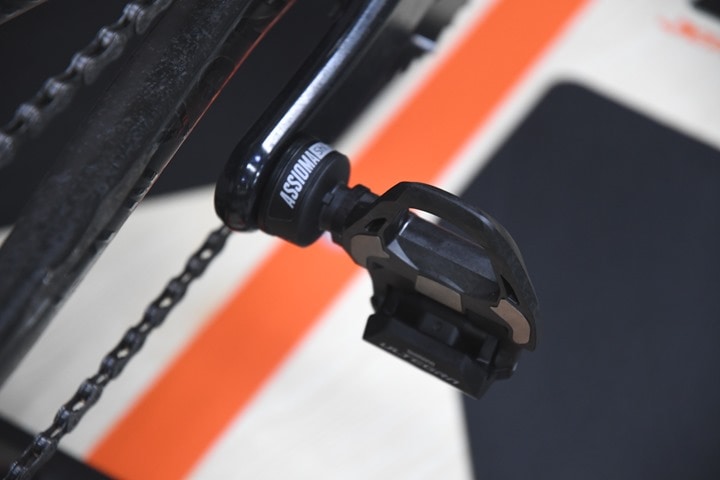
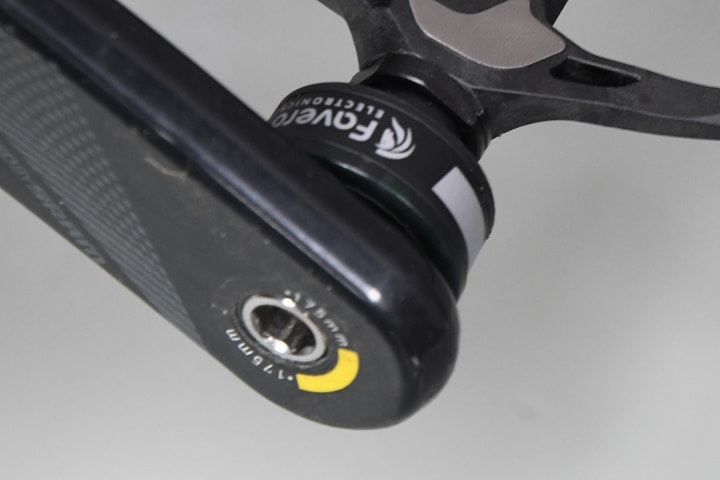
Finally, do one last zero offset (also called a ‘manual calibration’ in the app), on the app or your bike computer. And, if you haven’t already done so, validate your crank length specified in the app matches that of your crank arm (e.g. 172.5mm, 175mm, 170mm – those are the most common three). It’s printed on the inside of your crank arm, usually near the very end. You can see mine showing 175mm:
Ok, now, let’s talk day-to-day stuffs.
Basic Riding Details:
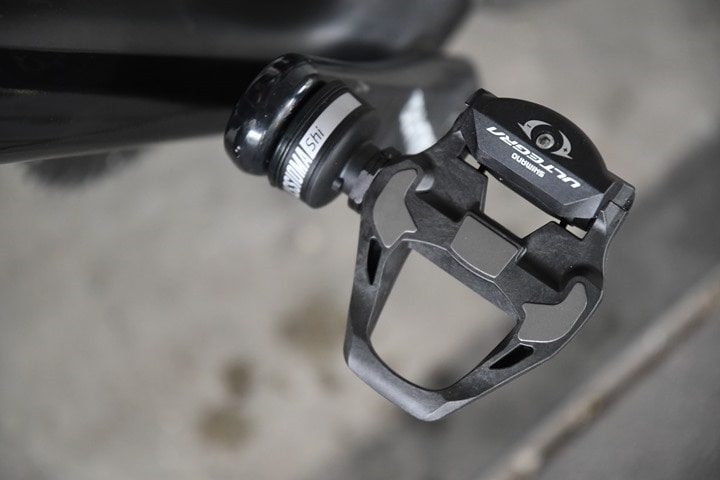
We’ll first start with the app, and quickly run through some of the options there. The Favero Assioma smartphone app is how you’ll initially activate the pedals, as well as update firmware and configure any settings. For most folks, you’ll probably only touch this app once or twice a year (when Favero releases new firmware). Everything else, including recording your rides, you’ll do on your normal bike computer. This is no recording functionality here.
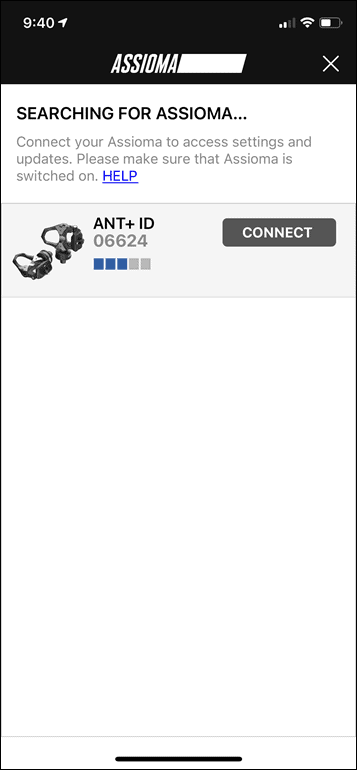
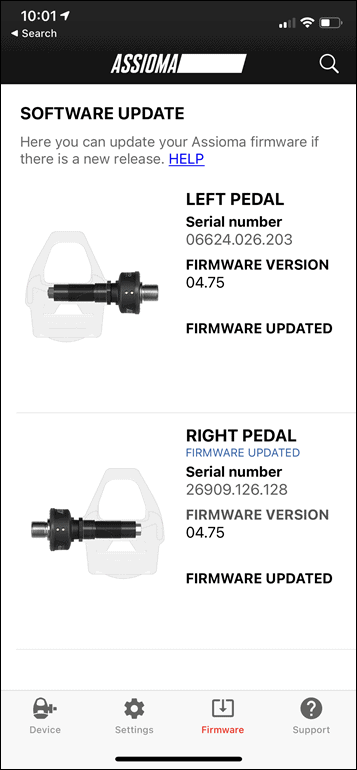
When you crack open the app you’ll see the option to search for pedals by tapping the magnifying glass. After that, you should see your pedals pop up, showing the ANT+ ID (even though it’s searching via Bluetooth Smart). The ANT+ ID (6624 in my case) is what you’ll see displayed on virtually every bike computer and cycling app. Go ahead and tap connect to connect to your Assioma pedals.
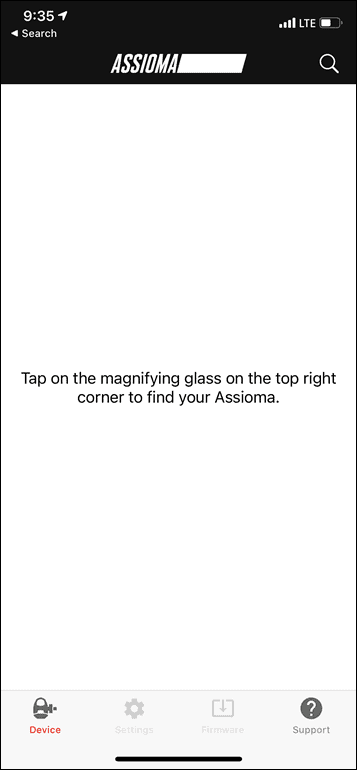
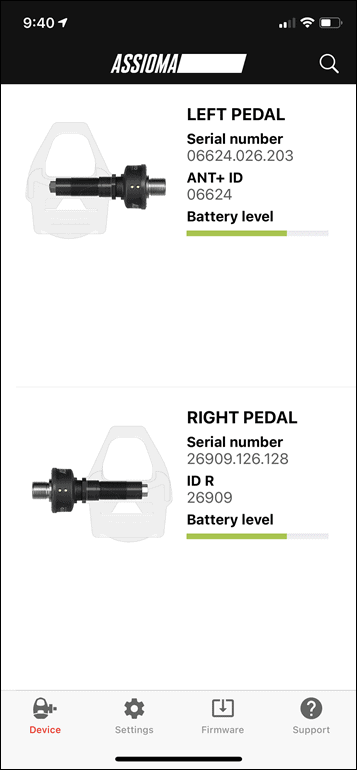
Once connected you’ll first see the screen at the left (below), showing the serial number, ANT+ ID of the set (if in a pair), and the battery level of each pedal. Tap on the settings option at the bottom and you can access all of the settings.
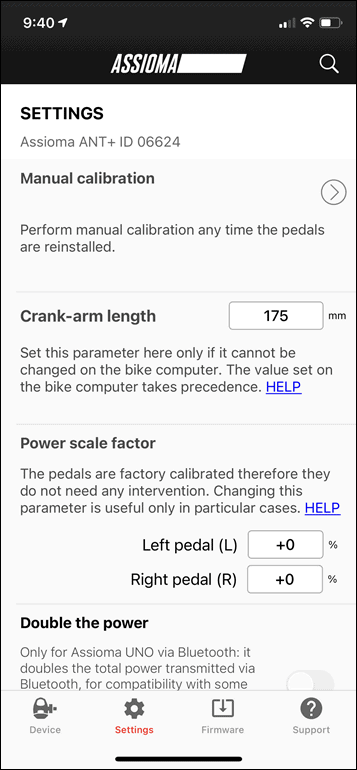
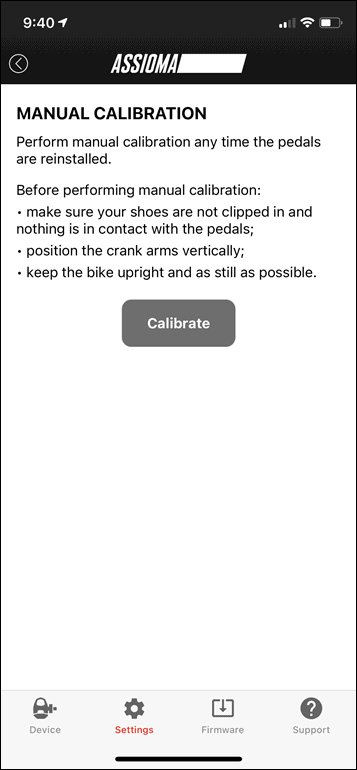
To iterate through some of these settings, the first one is manual calibration, or what’s technically known as a ‘Zero offset’. It recommends doing this with the crank arms vertically oriented, and like all power meters, you want to be clipped out of your pedals (and ideally off your bike). It doesn’t give you any specific value, just a success or fail message.
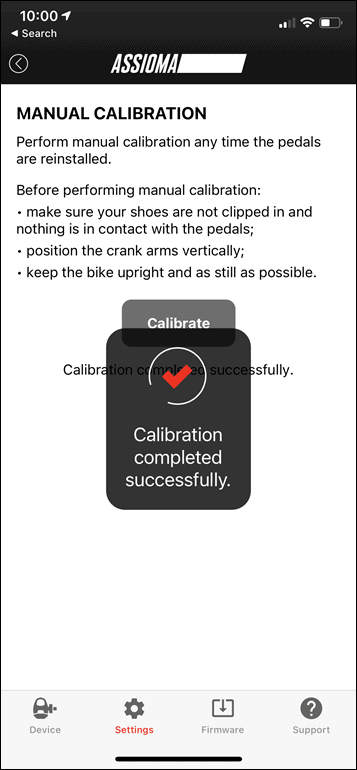
If you were to head back to the main page, you’ve got the previously mentioned option to set the crank length. This is important. If your crank length is set incorrectly, your wattage will be inaccurate. Not massively so, but slightly off. And since the point of buying an accurate power meter is to have accurate numbers, you’ll want to take the 5 seconds to set this correctly.
Below that is the ‘power scale factor’, which can be used for a wide assortment of non-normal situations. This can include having different crank lengths, or having a known inaccurate pedal (validated via static weight test). I’d argue if you have that scenario, you should contact support and fix it. But hey, you do you.
After that are two different app compatibility settings:
A) Double the power: This is useful for poorly programmed apps and watches (mostly) that still, half a decade later, haven’t figured out how to handle multi-channel power meters.
B) Compatibility with other apps: This is basically a variant of the first double-power category for apps that also can’t figure this out. A good example here being Zwift.
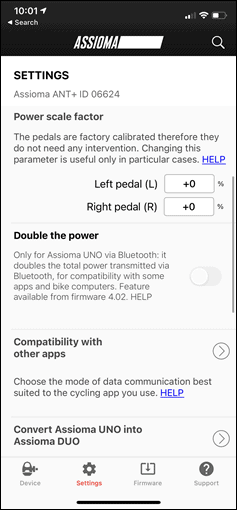
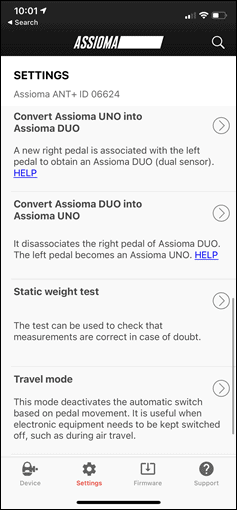
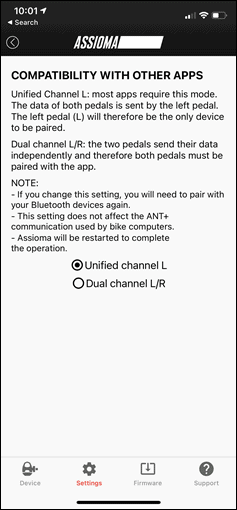
Below all that you’ve got the ability to convert a Favero Assioma Duo into an Uno, as well as make an Uno a Duo. Then you’ve got three more options most folks won’t use:
A) Static weight test: This is if you have a calibrated weight, to validate the calibration of the power meter.
B) Travel mode: This will put it into a mode that shuts down the pedals entirely, but requires you connect a charger to wake it back up. I’d generally *strongly* recommend against this. The reason is that there’s an approximately 110% chance you’ll put your pedals into this mode thinking you’re clever while packing your bike bag for a race. However, later that evening you’ll forget to grab your charger. You’ll thus arrive at your race unable to wake up your pedals, making yourself screwed. I mean, that’s just me. Maybe you’re smarter or somehow more organized (in which case you’ll forget your charger at the race hotel, screwing yourself for when you get home a few days later). Don’t get me wrong, I do appreciate Favero adding this feature. But like a McDonald’s gift card, it’s only a recipe for trouble.
C) Automatic Standby: This is below the travel mode, and allows you to change the automatic standby feature. By default it’ll go to sleep after 5 mins, and then wake-up again immediately upon pedaling. This saves batteries for café stops and such. However, if you’ve got a really finicky bike computer that doesn’t properly re-connect to sensors after a café stop, then perhaps you’d increase this timeout (at the expense of battery life).
And finally, to update firmware, you’d tap on the firmware tab, which, does exactly what you’d expect. It takes a couple of minutes, and updates the firmware via Bluetooth Smart. Favero has released numerous firmware updates over the years for their existing Assioma pedals, though that pace has slowed as the product has reached market feature maturity.
Ok, so with all those things covered, we can get it paired up to our bike computer. Pretty much any brand will work with the Favero Assioma pedals. I’ve used them successfully and without issue with almost every bike computer out there, though the features will vary based on the bike computer. For example, at the ‘low end’ of Favero features you’ve got the Suunto 9 Peak I was using last night. That covers the basics of power, but not things like left/right balance.
Then, you’ve got the Wahoo BOLT V2, also used last night. That does show left/right balance, but doesn’t record attributes like Cycling Dynamics, which Favero transmits. Finally, you’ve got the Garmin series of devices, like the Edge 1030 Plus I further also used last night, which records all the other stuff, plus Favero’s variant of Cycling Dynamics.
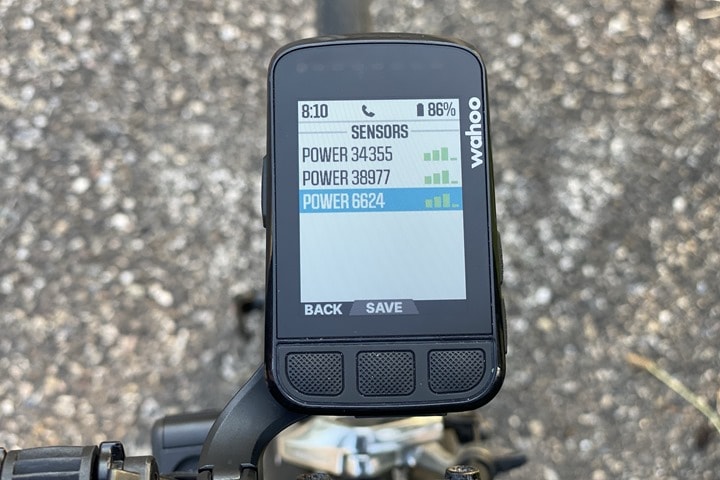
For fun, we’ll pair it up to a Wahoo BOLT V2. To do so, go into the sensors menu and search for sensors. It’ll come back and find a power sensor (or, many in my case). You can see the POWER 6624 listed, which is the ANT+ ID of the Favero pedals, so I’ll tap Save.
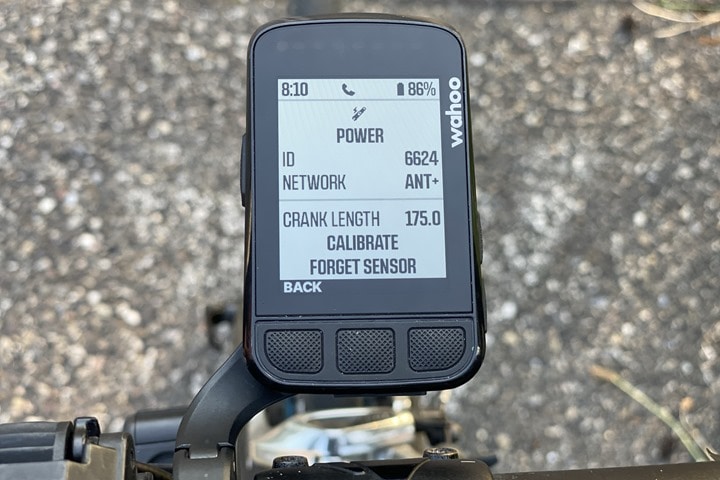
Once I’ve got that done, you’ll see the details of the power meter, including connection type (ANT+), the ID (6624), and the crank length properly enumerated. As a general rule of thumb for power meters, you should always pair via ANT+ over Bluetooth Smart, if able. The power meter spec is far more mature on ANT+ than Bluetooth Smart for data field types, where most advanced pedaling data metrics for most power meters simply don’t exist over Bluetooth Smart (regardless of which bike computer you use).
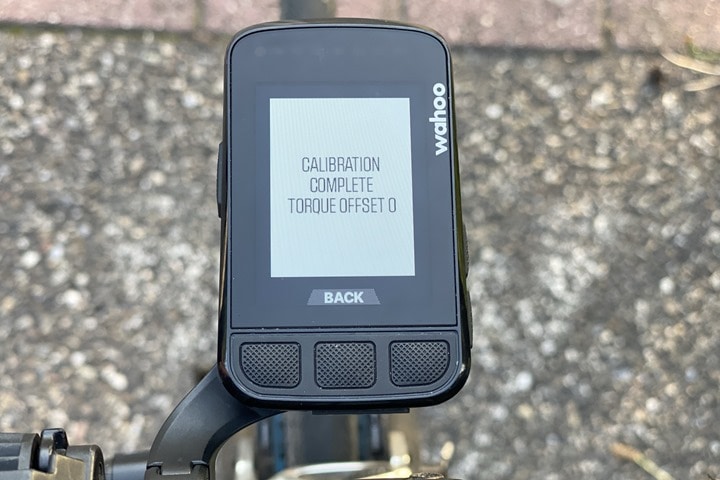
On any bike computer you’ll be able to calibrate it, and you can see here when I do that I get back a success response of ‘0’ and that it’s complete.
Since we’re on the BOLT, here’s what the power looks like while pedaling along. In this case I’ve configured some 30-second data fields, as well as left/right balance.
Meanwhile, if we switch over to the Garmin Edge 1030 Plus, and set it for the Cycling Dynamics data page, you can see some of the Cycling Dynamics data, specifically the ‘Power Phase’ data, shown at the top and bottom of the page, as well as the left/right breakouts. All of this is recorded to the data files.
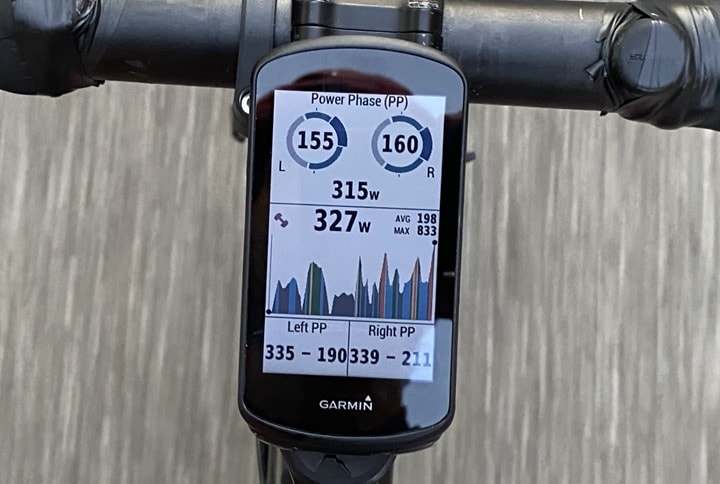
By default, Favero transmits this first set of ‘normal data’ to basically every bike computer/app out there:
– Power (Total): Your total power being transmitted – e.g. 227w (via ANT+ & Bluetooth Smart)
– Power (Balance, left/right): Your power balance between left and right side – e.g. 46%/54% (via ANT+ & Bluetooth Smart)
– Cadence: Your pedaling revolutions per minute – e.g. 94rpm (via ANT+ & Bluetooth Smart)
– Torque Effectiveness: How much of the pedal stroke is actually contributing to going forward (versus lifting up on the pedal) – i.e. 74% (via ANT+)
– Pedal Smoothness: How smooth your pedal stroke is all the way around – i.e. 82% (via ANT+)
However, in addition, almost two years ago to the day, they added ANT+ Cycling Dynamics to their Favero Assioma pedals too. At present, only Garmin supports it (though other ANT+ manufacture members can certainly add it).
The ANT+ Cycling Dynamics spec allows for three additional pieces of data, for which Favero has implemented two of them:
– Platform Center Offset (PCO): Not implemented on Favero Assioma
– Power Phase: Yes, implemented on Assioma
– Rider Position: Yes, implemented on Assioma
And again, to see any of this, you’ll basically need to be on a Garmin device. While Wahoo has implemented advanced pedaling metrics for Pioneer power meters, they don’t save the data, nor is that ANT+ Cycling Dynamics. Maybe now that Pioneer is dead, they’ll switch over. Or, maybe not, since they’ve got their own pedals coming out.
Now, after a ride you’ll be able to see this additional Cycling Dynamics data on Garmin Connect (or the mobile app), it won’t show up on sites like Strava. You can look at my ride from last night as an example.
At the top section of the graphs you’ve got cadence, then the seated/standing position (the neon green bits are me standing, blue is seated). Followed by wattage and left/right balance.
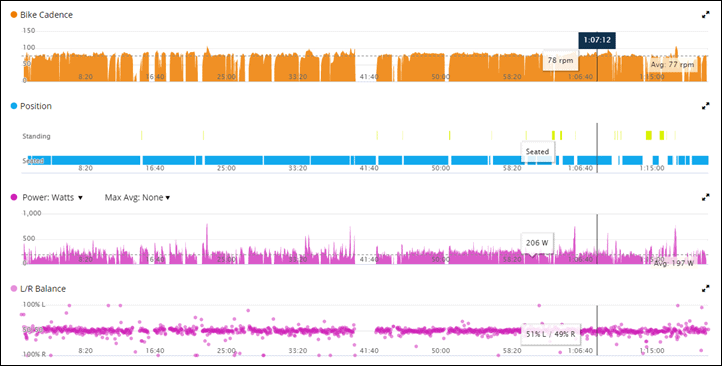
Then below that, you’ve got the platform center offset. Except Favero doesn’t transmit this, so these will be ‘0’ across the board.
After that, there’s power phase, which can show both the start/end as well as peak power by selecting the drop-down.
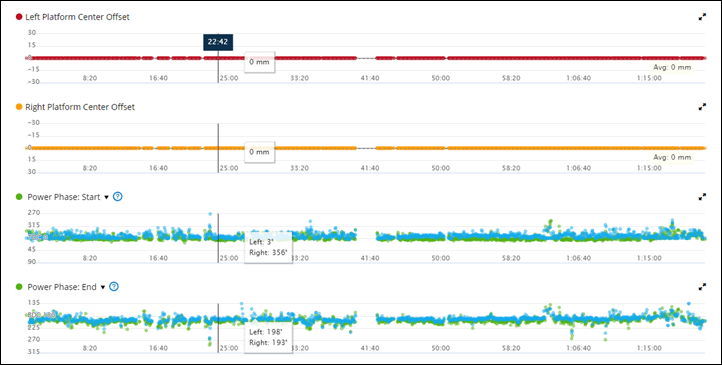
All of this data you can dig in more deeply if you want from a charting standpoint by expanding it and zooming/etc…
Down below further is a pile of summary data:
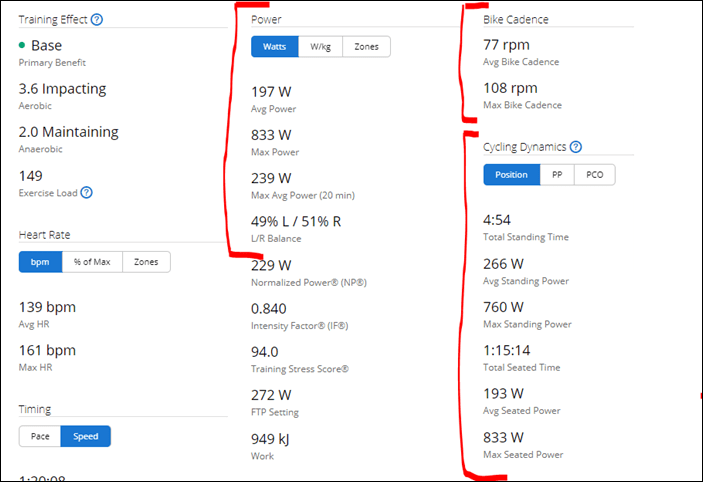
And then you can also tap on the ‘Cycling Dynamics’ tab to view summary info there too, with pretty graphics. Except PCO won’t show up, because PCO isn’t on Favero Assioma pedals.
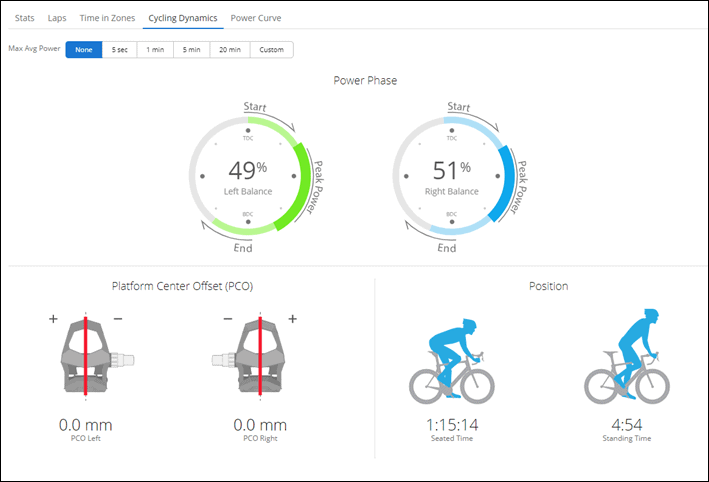
I won’t re-hash how (or how not) to use Cycling Dynamics data on Favero Assioma’s, as I already wrote a long post on that here you can reference.
When it comes to charging, the Favero Assioma pedals use rechargeable batteries that are built into the pods themselves. You’ll see the small contact points on the outer edge of the pod:
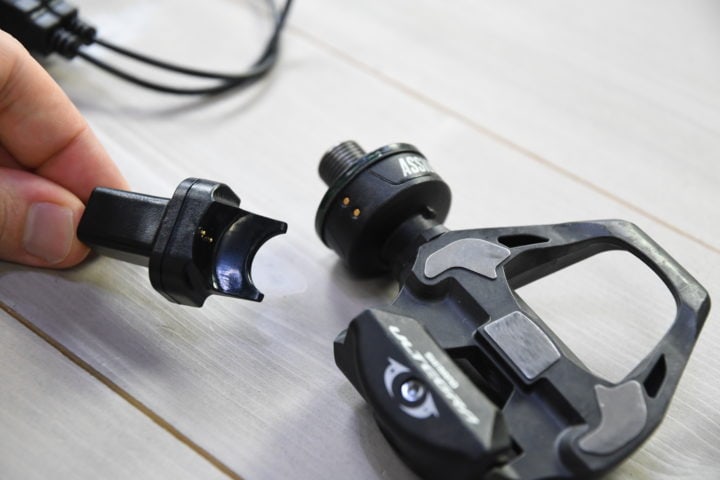
The USB-based charging connector then magnetically snaps onto these. It fits quite nicely, and illuminates once charging. Favero advertises 50 hours of battery life per charge. That seems plausible to me. I honestly don’t track my total battery hours on bikes that closely, especially since I’m often moving them around for photos/videos/etc… In general my gut check here says ‘sure, sounds fine’ (along with my gut chuck on using Favero Assioma pedals for four years otherwise).
In any event, the two charging cords connect to the dual-USB port power outlet. The cables are nice and long, so it’s easy to charge them while still on the bike.
Also – I’ve seen some concern about what happens when the batteries ‘die’, apparently in reference to how you might swap them out. Some of this is due to misunderstandings about how rechargeable batteries die. First off is that batteries are generally rated to a certain number of recharge cycles, in the case of the Assioma battery, that’s estimated to be about 500 cycles (per an e-mail from Assioma). Once it reaches that number, they don’t stop working. Instead they might slowly degrade, perhaps to 80% of battery capacity. With an example battery life of 50 hours, and the 500 recharge cycles, that puts you at 25,000 hours of battery life before it starts to degrade. That’s 24 years of riding 20 hours per week. Or almost 50 years if you rode 10 hours per week. Seriously, you’ll have long moved onto something else by then. Battery cycle time is not your concern here.
Finally, a brief note about the pod durability. The pods are internally sealed with a resin, which protects everything inside of them. In my Favero BePro review nearly 6 years ago I noted that in the couple months I used my set then, that the outer shell got damaged and I was concerned about long-life durability. Thankfully, that turned out not to be an issue, and I don’t believe I’ve received a single complaint about that being an issue for the BePro units. And with Assioma, breaking of the pod is virtually unheard of.
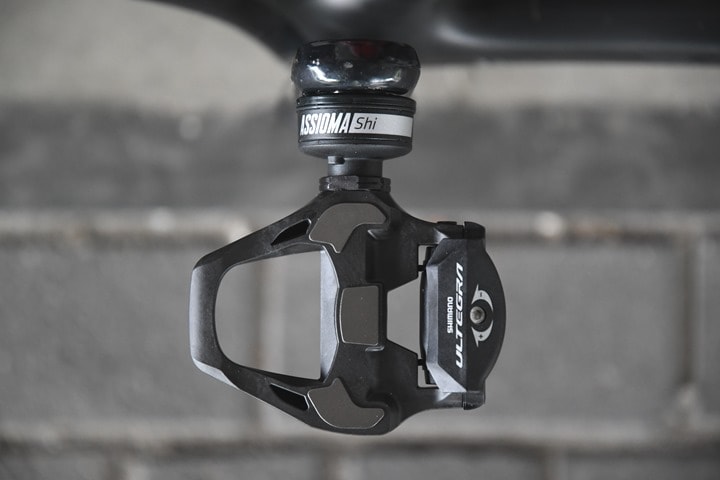
The main issue at this point, in 2021 – is that there’s a pod at all. Obviously, four years ago we had this discussion when the Assioma came out, given that neither PowerTap or Garmin had pods then. Fast forward a few years and SRM doesn’t have pods either. I think it’s a valid criticism that in four years since Assioma’s have come out, the spindle is identical to back then and the pod is still there. While Favero has come out with various firmware updates (like the Cycling Dynamics), I think a lot of people were sorta hoping to see that pod design go away, given the advances in technology.
Nonetheless, there’s something to be said for reliability and a known quantity – for which the Shimano variant of Assioma delivers upon.
Power Meter Accuracy:
I’ve long said that if your power meter isn’t accurate, then there’s no point in spending money on one. Strava can give you estimated power that’s ‘close enough’ for free, so if you’re gonna spend money on something, it shouldn’t be a random number generator. Yet there are certain scenarios/products where a power meter may be less accurate than others, or perhaps it’s got known edge cases that don’t work. Neither product type is bad – but you just need to know what those use/edge cases are and whether it fits your budget or requirements.
As always, I set out to find that out. In power meters today, one of the biggest challenges is outdoor conditions. Generally speaking, indoor conditions are pretty easy to handle, but I still start there nonetheless. It allows me to dig into areas like low and high cadence, as well as just how clean numbers are at steady-state power outputs. Whereas outdoors allows me to look into water ingest concerns, temperature and humidity variations, and the all-important road surface aspects (e.g. vibrations). For reference, the Favero Assioma DUO-Shi has a claimed accuracy rate of +/- 1.0%.
In my testing, I generally use between 2-3 other power meters on the bike at once. I find this is the best way to validate power meters in real-world conditions. For the final set of production pedals, I was using these other power meters or trainers concurrently in two main configurations:
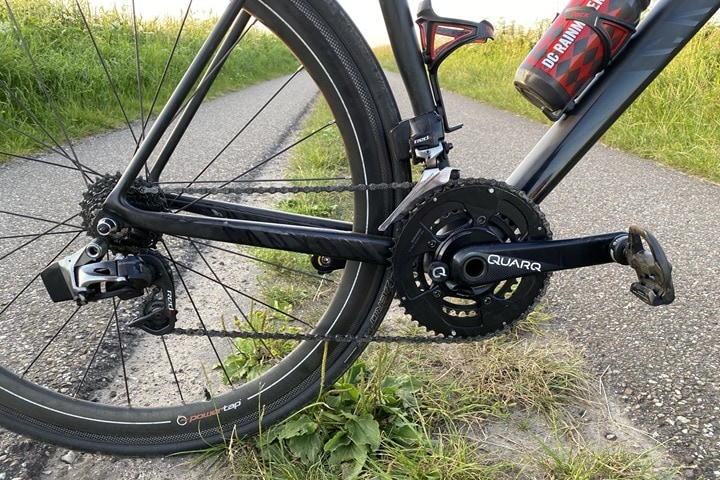
Outdoor Testing Config (Canyon Ultimate CF SL)
– Favero Assioma DUO-Shi
– Quarq DZero power meter
– PowerTap G3 hub power meter (when outdoors)
Indoor Testing Config (Canyon Ultimate CF SL)
– Favero Assioma DUO-Shi
– Quarq DZero power meter
– JetBlack VOLT Smart Trainer
But the reality is I’ve literally got data sets over the last year comparing against:
– TrueKinetix TrueBike (April-May 2020)
– Tacx Flux 2.1 (July 2020)
– Wahoo KICKR V5/2020 Trainer (August 2020)
– And many more outside sets (July 2020 – June 2021)
First off, indoors. Starting off with something relatively straightforward, an ERG workout with various intervals at three main intensities, including 30-second sprints. In this workout I’m looking for stability of the power, as well as lack of drift. A workout like this makes it easy to spot drift (such as temp drift), since you’d see things start to differentiate from start to finish. In any case, here’s the data set:
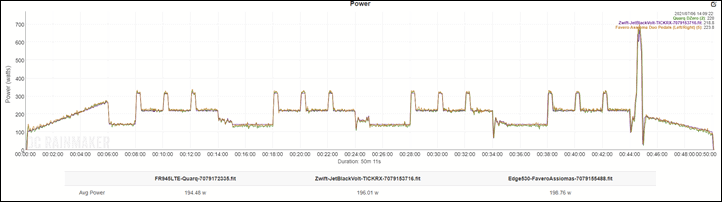
As you can pretty easily see, that looks super crispy good. The data sets are very closely aligned between the units (Quarq DZero crankset and the JetBlack VOLT). One might argue the JetBlack should be a hair bit lower, but in the context of the Favero Assioma that’s not really the focus.
If we look at the intervals where the trainer jumps up quickly, the Favero reacts instantly, and also correctly shows when I wasn’t paying attention at the start of an interval – as you see a bit of an oscillation there. That’s real. And, interestingly, also shows where the JetBlack applies a touch bit of ‘ERG Smoothing’ to make it look like those don’t exist. But in this case, the Quarq & Favero power meters accurately show the truth (my inattention, causing the little blip, since my legs weren’t ready for it).
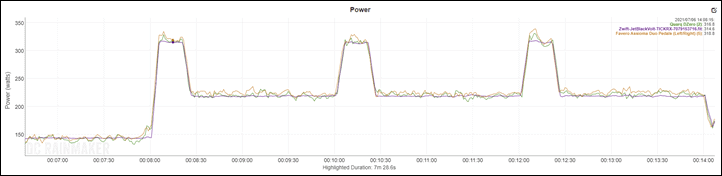
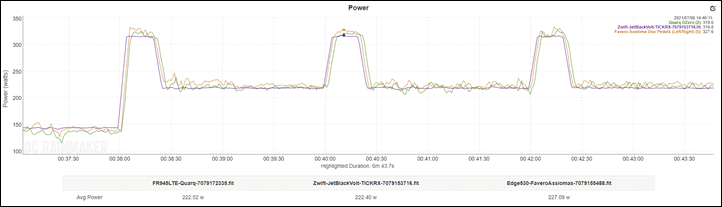
Here’s another example a few interval chunks later, again, every unit is very close here, with the slight timing differences between sets mostly owed to the nuances of multiple devices and recording rates. Note however on the middle interval below, I was really focused on it, and there isn’t any sort of blip/wobble in my power. This obviously has absolutely nothing to do with accuracy, except to show how sensitive power meters can be.
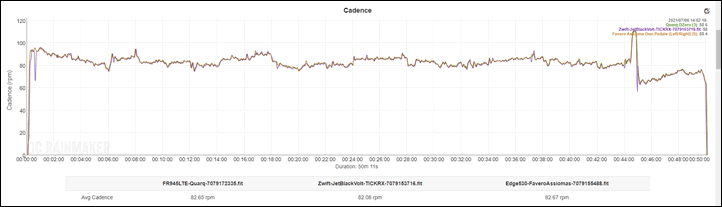
In terms of cadence, I haven’t seen any variations at all here with the DUO-Shi units. These mirror the Quarq, and even the JetBlack mirrors it. In fact, across both sets I’ve had for the past year, cadence has been absolutely spot-on.
Next, we’ll dive over into simulation mode for a ride on Zwift. In this case, I’m starting off the first 30-35 minutes in a large group at a relatively consistent wattage, but with any sort of group ride, you get constant micro-fluctuations in wattage, making it fun to see how the different units respond. In particular, some power meters and training can do funky things with that much movement, in terms of how they handle soft-pedaling. Here’s that data set:
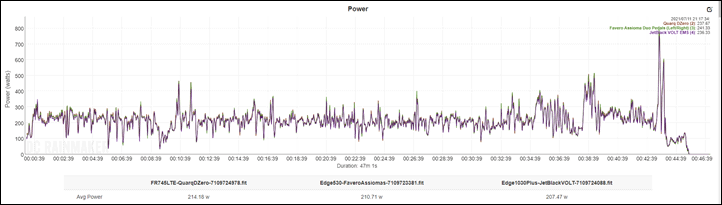
As you can see, it’s incredibly similar. Let’s zoom in though on a few random chunks. The first thing I’ll note is that we generally see ‘proper’ ordering, with the VOLT as the lowest power source (since drivetrain losses occur the further away from the foot we get), and the Favero/Quarq the highest. So that’s good.
I notice that the Favero/Quarq units spike together correctly on the sprints, with the VOLT undershooting slightly. That’s somewhat common in many trainers, especially as they try and play ‘catch-up’ on quick surges. But it’s good that I don’t see any delay on the DUO-Shi or Quarq units.
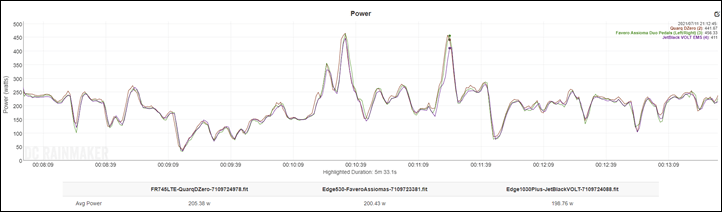
Here you can see just how close all the units are, with only the slight differences from the trainer when I surge, depending on how quickly it is that I surge (some surges the trainer is fine, others it’s a bit latent).
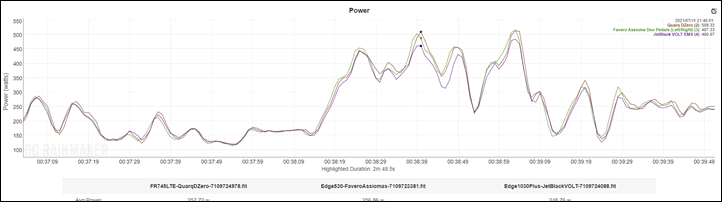
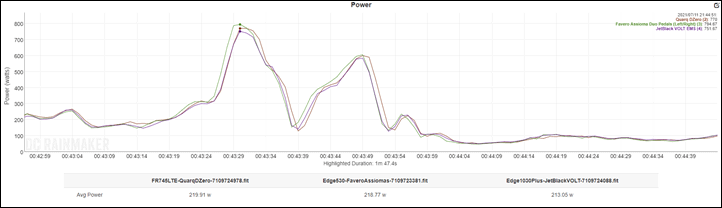
If we look at this 800w sprint (keeping in mind this multi-second average graph is smoothed, so the actual value is higher), you can see it’s actually rather close to the Quarq. Whereas the Favero overshoots a bit higher. In any sort of sprint effort, it’s often rather difficult to know exactly which one is actually correct.
Meanwhile, cadence is virtually identical across the board again on this, save the handful of times for the trainer with estimated cadence and it briefly recovering on a sprint (or rather, the afterglow of the sprint). But again, zero issues from the Assioma here.
Ok, let’s head outside. Frankly, these sets are going to be boring. Here, let me do this backwards and instead just show you the mean-max graph for this ride from a few weeks ago (against a Quarq DZero & PowerTap G3):
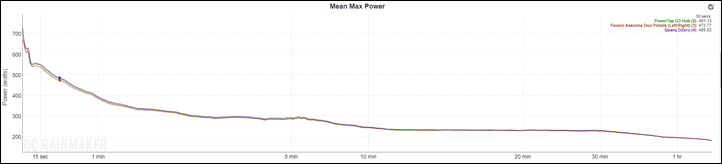
It’s incredibly close between them, and the data point shown/highlighted there is the 30-second one, but as you can see, the three plots are very close (though, perhaps too close in one way, more in a second). Here’s the actual ride data:
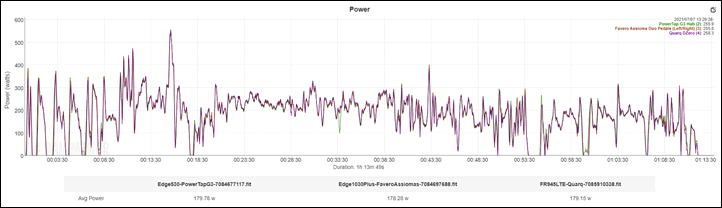
Again, excruciatingly close here. The only nitpicking I’d have at this stage is that the PowerTap G3 is probably a smidge high, and the Favero a touch low. But this was after swapping bikes, so things might not have been fully settled yet (and in fact, the trainer rides later firm up nicely).
If we zoom in on a few different moments, you can see the slight variations between multiple bike computers/power meters in terms of recording/transmission rates, but these are super close for what is a multi-surge effort here:
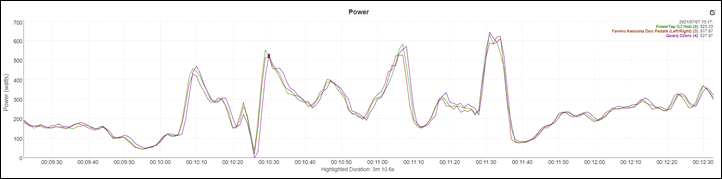
Really nothing super exciting or problematic here:
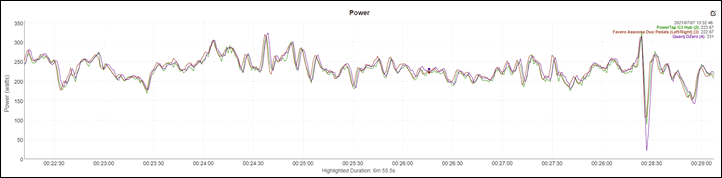
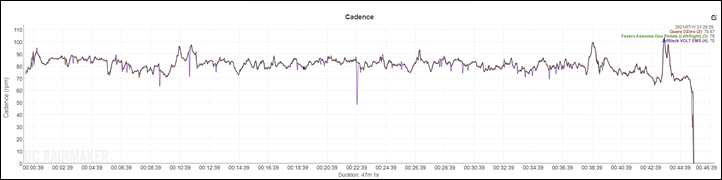
Cadence is clean too. You’ll see the dips in the green graph of the PowerTap G3, as that’s an estimated cadence, and isn’t particularly great at surges for cadence estimation.
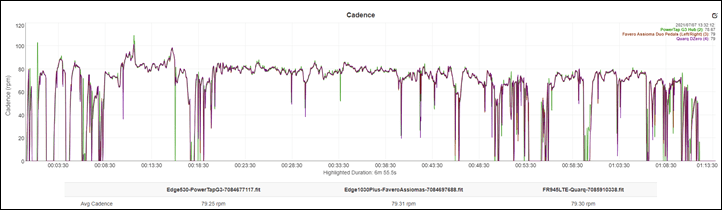
But again, things look very close here.
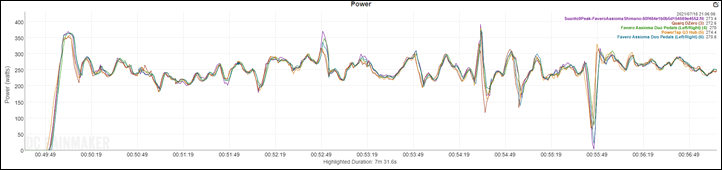
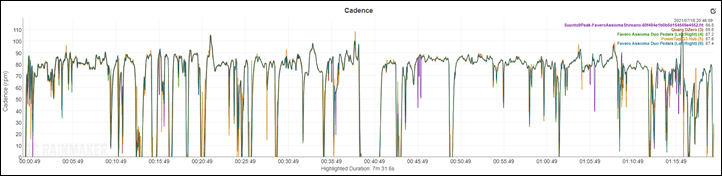
So, let’s switch to one last set from last night, this was a nice warm sunset ride, where the temperature slowly cooled down – great for catching any drift issues. Also, for fun, I recorded the Assioma across three different devices too (Wahoo BOLT V2, Garmin Edge 1030 Plus, Suunto 9 Peak), to catch any recording quirks there. Here’s that data set:
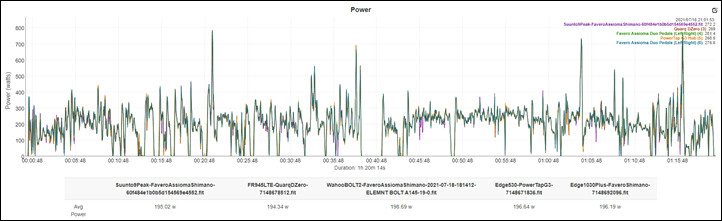
Note that you’ll see slightly different numbers at the bottom, due to the slightly different recording/transmission timings of each unit. But, the Mean-Max graph shows a much better picture of things – which is to say, it looks nearly identical.
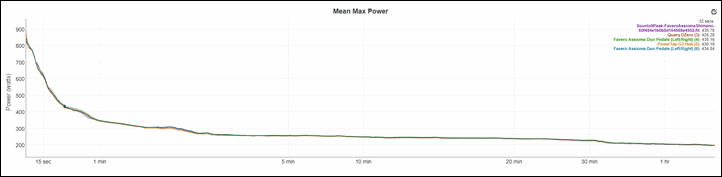
If we take a look at a few spots, here’s a sprint, smoothed at 5-seconds. You can see all the units travel together fairly well, though oddly we see the data from the Suunto 9 Peak a bit more quirky. That’s because the Suunto 9 Peak (like all Suunto units), only pairs to a single side of this duo, and thus we’ll see variations based on left/right balance, unless I specifically toggle the single-channel option (which, I did not).
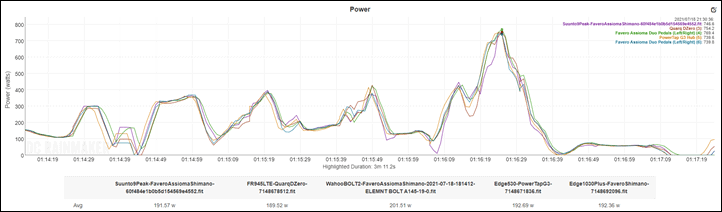
Still, these are very tight graphs across the board here. Again, if I were to nitpick anywhere, it’s that the G3 should be a tiny bit lower (a couple of watts, given drivetrain losses), but I think I just need to get this G3 hub in for its usual maintenance.
And cadence looks good here too.
There’s little reason to keep on showing more and more data sets. The data is spot-on for me, and replicates what I and many others have seen on the Favero Assioma units over the years. Given this is the same spindle (meaning, it’s the same thing), I figured it’d act the same. But as usual, I validate and verify it’s actually the same. Thus far, things look solid. And by ‘thus far’, I mean over a year’s worth of riding.
(Note: All of the charts in these accuracy sections were created using the DCR Analyzer tool. It allows you to compare power meters/trainers, heart rate, cadence, speed/pace, GPS tracks and plenty more. You can use it as well for your own gadget comparisons, more details here.)
Summary:
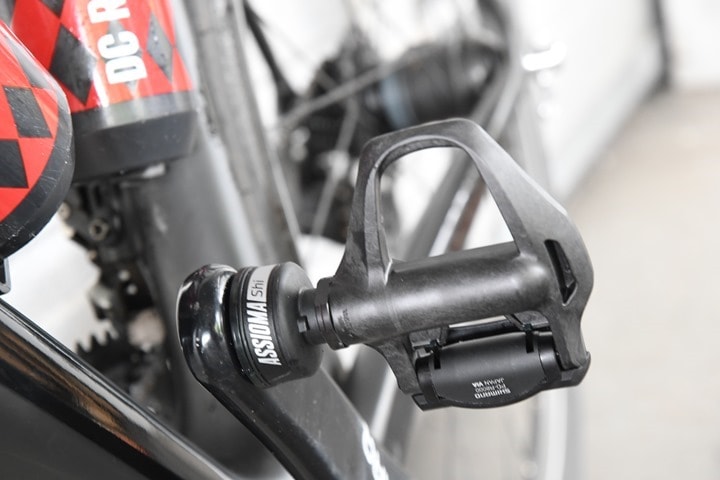
In a lot of ways the Favero Assioma DUO-Shi pedals remind me a bit of what Watteam did a few years back: Offer a cheaper product in exchange for you being the assembly factory. In other words, if you look at Garmin’s SPD-SL based product, Rally, they charge a premium for a completely assembled/supported product (among other reasons it’s premium priced, like also swapping to SPD MTB and LOOK KEO, etc..). Whereas Favero charges some $ 400-$ 500 less, but you need to source the extra parts/tools/time to complete before installation. For some folks, that’s a no-brainer trade-off. Whereas for others, the catches are less appealing.
Of course, the key difference to my Watteam harkenings is that Favero’s product isn’t fiddly and dependent on your ability to fill up water bags, and more importantly, Favero has a strong history of accuracy in their units. All three iterations of Favero pedals I’ve tested over the years (BePro, then Assioma, and now Assioma DUO-Shi) have been accurate. And not just me, but a lot of people too. I routinely use them as power meter reference devices. They’re just as accurate as the Garmin Rally pedals (really, it’s a wash in my brain).
Point being that if the assembly and q-factor limitations aren’t an issue for you, then the Favero Assioma DUO-Shi pedals are a solid option to consider when looking at power meters. Which yes, reminds me again I need to do anther power meter round-up, now that we’ve finally got some new power meters this year. Though ironically, almost everything new released this year is merely a rebrand of existing products with the same spindles. So…same same, but different. 🙂
With that – thanks for reading!